




Introduction
Businesses invest in software to improve productivity, yet many employees end up spending more time switching between applications than completing meaningful work. As organizations adopt more tools, workflows often become more complicated instead of more efficient.The real challenge isn’t a lack of software—it’s the number of unnecessary clicks required to get work done.The Hidden Cost of Extra Clicks
Think about a simple customer request. An employee may need to:- Copy customer details from an email.
- Update the CRM.
- Create a support ticket.
- Notify the team.
- Update a spreadsheet.
More Software Doesn’t Always Mean Better Productivity
Many businesses continue adding new applications for different departments—CRM, HR, accounting, project management, and communication tools. While each tool serves a purpose, they often don’t work together seamlessly.As a result, employees become the bridge between disconnected systems, manually entering the same data multiple times.This isn’t digital transformation—it’s digital complexity.The Smarter Approach: Workflow Automation
Rather than adding another application, businesses should focus on simplifying existing processes.Workflow automation can:- Automatically transfer data between systems.
- Eliminate duplicate data entry.
- Route approvals instantly.
- Send notifications automatically.
- Reduce manual errors.
- Speed up daily operations.
Where AI Adds Value
AI takes automation a step further by making workflows more intelligent. It can:- Classify incoming requests.
- Recommend next actions.
- Generate summaries.
- Prioritize tasks.
- Detect unusual activities.
- Reduce repetitive decision-making.
Start with Your Processes
Before investing in another software solution, ask these questions:- Which tasks are repeated every day?
- Where is the same data entered multiple times?
- Which approvals slow down work?
- Which systems don’t communicate with each other?
Conclusion
Digital transformation isn’t about using more software—it’s about making work easier.Every unnecessary click adds friction, slows productivity, and increases operational costs. By streamlining workflows and connecting existing systems, businesses can reduce manual effort, improve accuracy, and create a better experience for both employees and customers.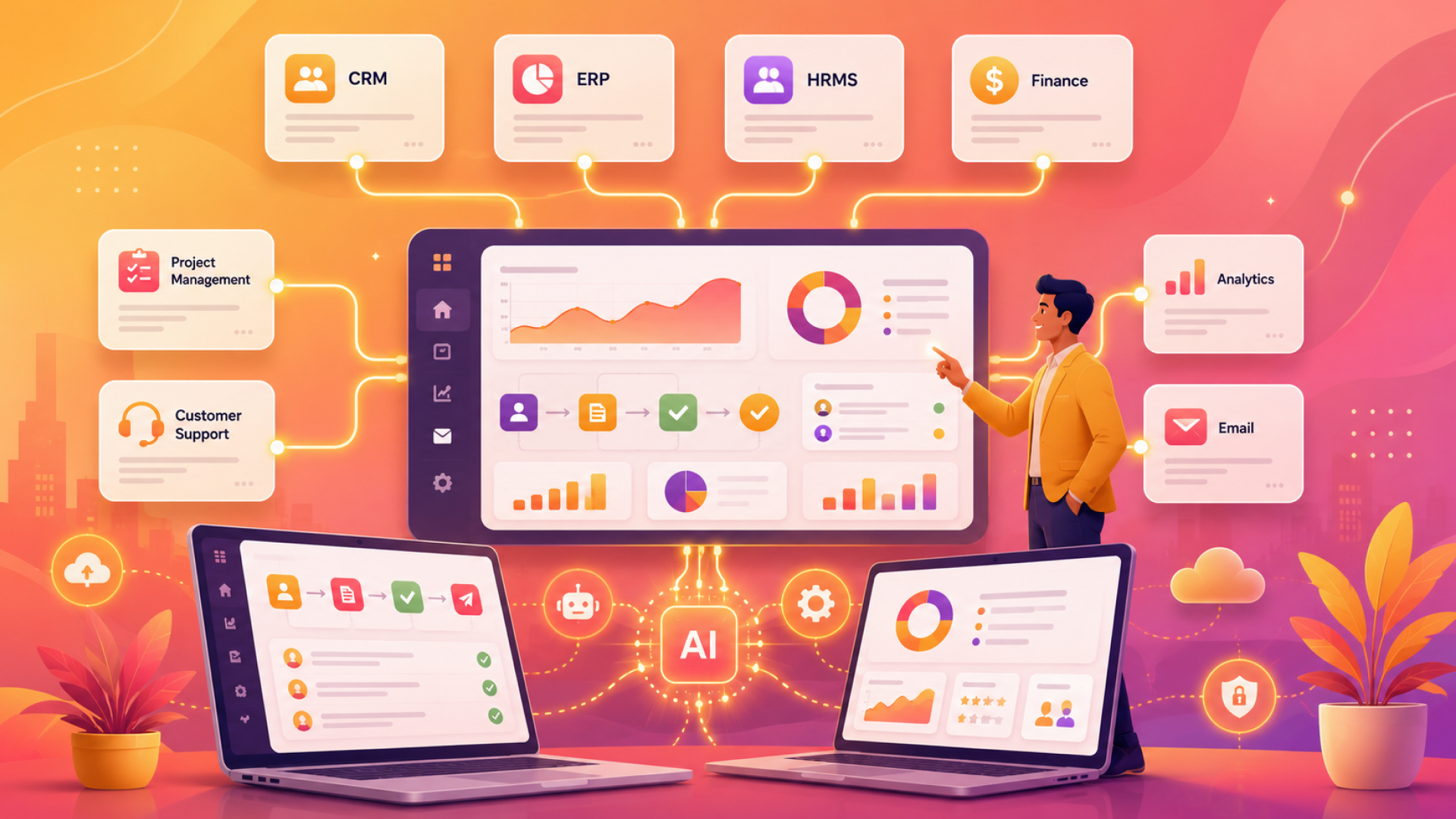
How Lentera Technologies Can Help
At Lentera Technologies, we design custom workflow automation and AI-powered solutions that simplify complex business processes. Instead of adding more software to your technology stack, we help you connect existing systems, eliminate repetitive tasks, and create smarter workflows that improve efficiency across your organization.
Ready to reduce clicks and increase productivity? Contact Lentera Technologies today to build workflow automation that works for your business.